

11 August 2025
German-Uzbek cooperation for the preservation of authentic cultural buildings: Khiva/Uzbekistan and Quedlinburg/Germany
Quedlinburg, Germany
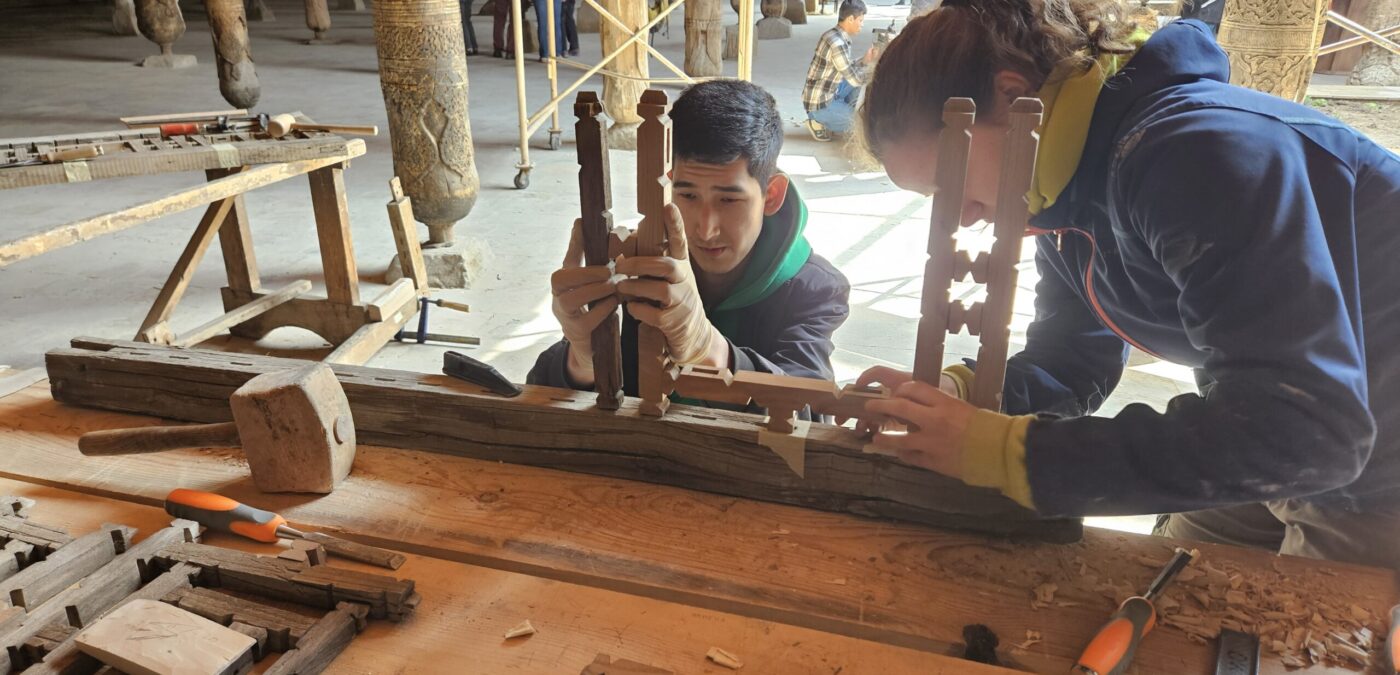
The Fachwerkzentrum (Half-Timbered House Center) in Quedlinburg and the Khorezm Mamun Academy in Khiva are working together on the sustainable restoration of important buildings in Uzbekistan and Germany. The aim is to preserve historical substance using traditional craft techniques, ecological materials, and practical education. The Juma Masjid in Khiva and a Renaissance half-timbered building in Quedlinburg serve as international teaching locations and models for monument preservation in the interests of environmental and climate protection.
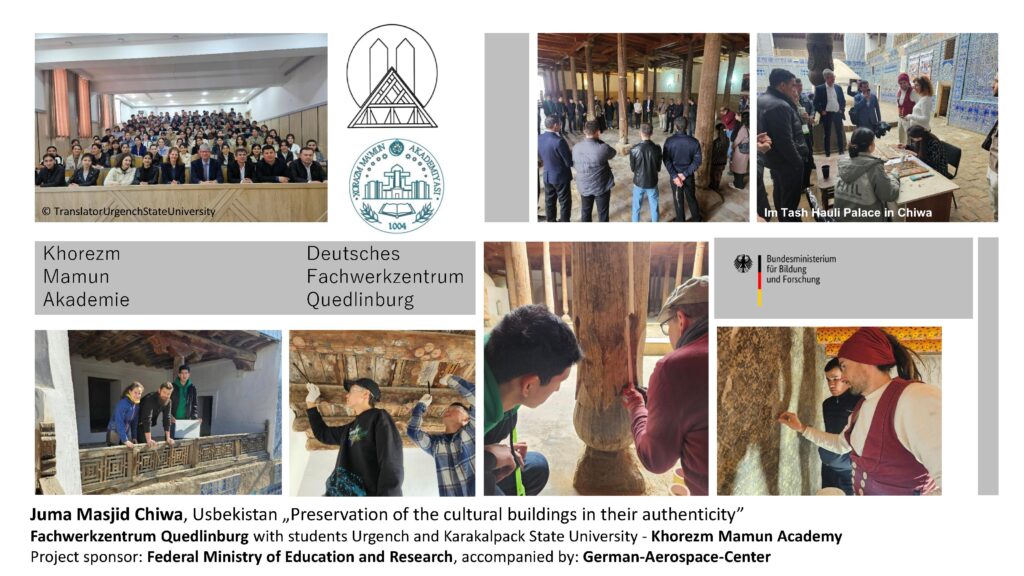
Preserving the authenticity of cultural buildings – an Uzbek-German project
For more than 20 years, the Fachwerkzentrum (Half-Timbered House Center) in Quedlinburg has been committed to promoting the resource-saving, energy-efficient, and energetic use of historic half-timbered buildings and to protecting monuments in an environmentally conscious, sustainable, and ecological manner. This goal is achieved through the use of traditional craft techniques, the greatest possible preservation of existing structures, the reuse of building materials, and the use of ecological materials. We see the energy-efficient, resource-conserving, sustainable restoration of cultural buildings in their individuality and originality as a research task for monument preservation and an educational task for people from different countries of origin. Using multi-layered strategies, this is transferred outside the lecture halls to abandoned historic buildings, which then become places of teaching and learning. The aim is to restore cultural assets and contribute to international understanding.
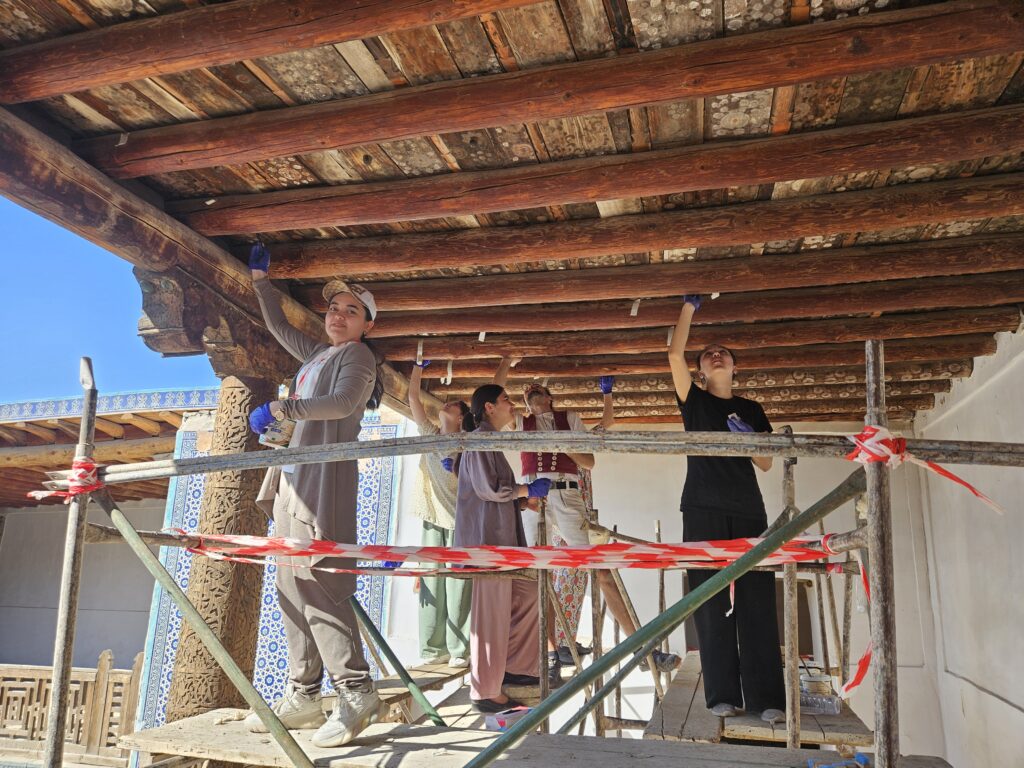
The transnational cooperation between the Fachwerkzentrum with external colleagues and the Khorezm Mamun Academy within the project “Preserving the authenticity of cultural buildings – an Uzbek-German project” offers the opportunity to design a globally usable toolkit for the preservation of cultural heritage with modules ranging from research to the restoration of monuments, to define different methodological approaches, and to pass them on in international seminars as an educational program. Teaching locations outside of lecture halls impart skills that create responsible, sustainable decision-making levels beyond the seminar objectives. The results serve to preserve, educate, and train, and contribute to protecting our environment and achieving climate goals.
The teaching locations here are the Juma Masjid / Tash Hauli Palace in the Itchan Kala Museum Reserve (UNESCO World Heritage Site) in the city of Khiva, a magnet for many tourists visiting Uzbekistan, and the former noble court (built in 1566) in Wordgasse near the market square of the World Heritage city of Quedlinburg. They are irreplaceable witnesses to contemporary history, whose preservation is a complex but possible task.
The 213 wooden columns of the Juma Masjid from different eras are of inestimable value. The oldest columns from the 10th/11th century are decorated with reliefs and inscriptions, while younger columns feature geometric patterns and plant motifs. The Juma Masjid was renovated for the 2,500th anniversary of Khiva (1996-1997) and some new columns were installed.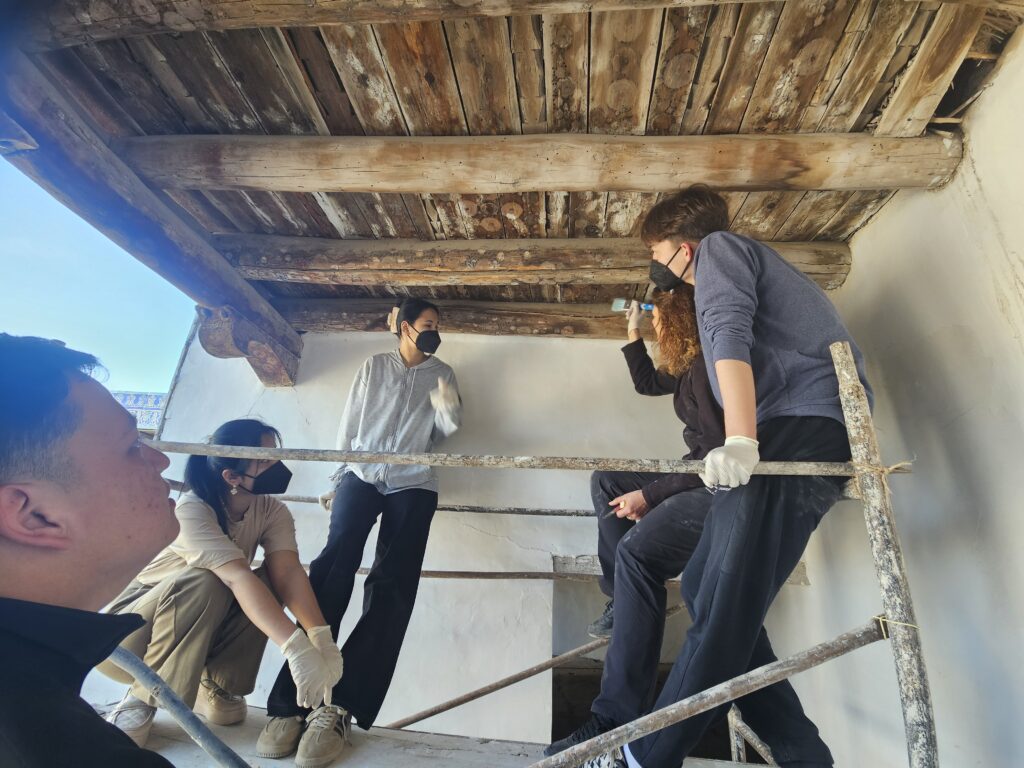
In the Renaissance half-timbered building (a former noble court) in Quedlinburg, the entrance hall with its impressive Baroque column, a fireplace dating from the time of construction, and wall paintings in particular demonstrate the high cultural value of this architectural monument. Around 1970, safety measures were carried out which damaged the high-quality half-timbered architecture of the 16th century in many areas through interventions and the use of non-traditional wood joints in the restoration.
While the Juma Masjid still serves as a place of prayer and a venue for religious festivals today, the stately noble residence was used as a residence or business premises in the past. Both buildings have suffered not only losses in their historical substance but also progressive damage as a result of non-compliant interventions in the past.
Find Us

Espace Quatre Cents
100, Quai Saint-André, Bureau 140
Québec (Québec) G1K 3Y2
Canada
+1 418 692-0000
Confidentiality Policy
Social Media Policy