

Salzburg, Austria
General Information
Administrative status
Capital of the province of Salzburg.
Historic Centre of the City of Salzburg
Registration Year
1996
Historical function
Religious, university, industrial and artistic.
Location and site
In the heart of Europe, Salzburg is at the narrowest point of the Salzach Valley, protected by the Mönchsberg, Festungsberg and Kapuzinerberg Alpine peaks. Near the Salzkammergut saltworks, the gold mines, silver mines, and other mines, it was also at the junction of three Roman roads.
Urban morphology
The urban tissue in the ecclesiastical district differs from that in the burghers’ district. The former is spread out over a large area of the left bank and opens out at regular intervals into large squares, while the latter, in tight blocks, is only relieved by three market squares. All are dotted with fountains, gardens, statues and groups of sculptures, and several bridges connect the two banks. The Hohensalzburg Fortress, 120 m high, still dominates Salzburg.
The steeples, domes and belltowers are prominent in the town’s architectural skyline. Beautified and enriched over and over again, the town is a harmonious blend of styles: Roman, Gothic, Italian Renaissance, and above all, Baroque. The façades of the simplest stone dwellings contrast sharply with the architectural extravagance of the Archbishop-Princes in the ecclesiastical district. At the heart of the whole city is the seventeenth century Baroque cathedral.
Registration criteria
Criterion (ii): Salzburg played a crucial role in the interchange between Italian and German cultures, resulting in a flowering of the two cultures and a long-lasting exchange between them.
Criterion (iv): Salzburg is an exceptionally important example of a European ecclesiastical city-state, with a remarkable number of high-quality buildings, both secular and ecclesiastical, from periods ranging from the late Middle Ages to the 20th century.
Criterion (vi): Salzburg is noteworthy for its associations with the arts, and in particular with music, in the person of its famous son, Wolfgang Amadeus Mozart.
Historical reference
- The Roman town of Juvavum (built in Municipium in 15 AD) was established on the exact site of the future town of Salzburg, and spread over both banks of the River Salzach.
- On the left bank, at the foot of Mönchsberg, the episcopal seat originated with religious institutions dating from the end of seventh century. A duke’s palace was built between the ecclesiastical district and the river. The town took shape betwween the palace and the river. Illuminated manuscripts reveal the town’s intellectual and artistic development.
- Salzburg was built as an archbishopric (ninth century). The Hohensalzburg Fortress (1077) symbolizes its episcopal prestige; the new fortifications were of solid rock.
- The Archbishops were raised to the status of Princes of the Holy Empire (thirteenth century). The prosperity of the diocese depended on the saltmines and mineral deposits.
- The town filled up with monuments (fourteenth to eighteenth centuries). In the sixteenth century, Archbishop Wolf Dietrich von Raitenau transformed the town, opening up vistas and building palaces. Great artists lived and worked in Salzburg, and it enjoyed a Baroque renaissance.
- The seventeenth century saw the dawn of the Enlightenment, and the founding of the University of Salzburg. Mozart was born in Salzburg in 1756.
- In 1803 the Napoleonic Wars put an end to the power of the Archbishops.
Photos

News
17 August 2021
Salzburg World Heritage – a story behind history
Salzburg, Austria
Northwest Europe and North America
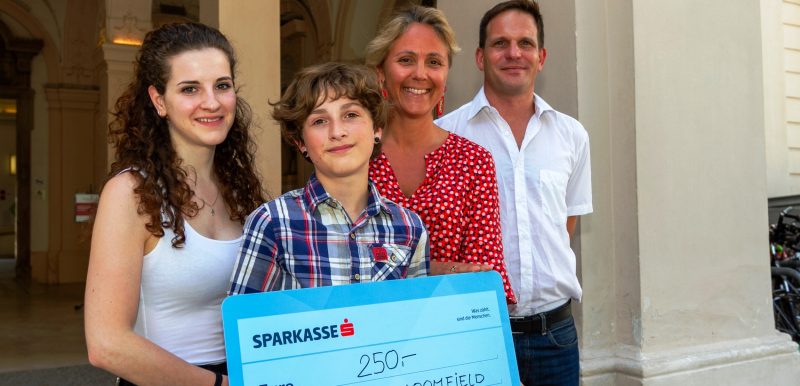
1 July 2019
Video Competition: “Time Warp in Salzburg” wins second prize in 14-17 year category
Salzburg, Austria
Northwest Europe and North America
4 February 2019
Salzburg receives two “Good Practice” Awards
Salzburg, Austria
Northwest Europe and North America
27 October 2017
City of Salzburg publishes new Booklet “Stories behind History”
Salzburg, Austria
Northwest Europe and North America
14 June 2017
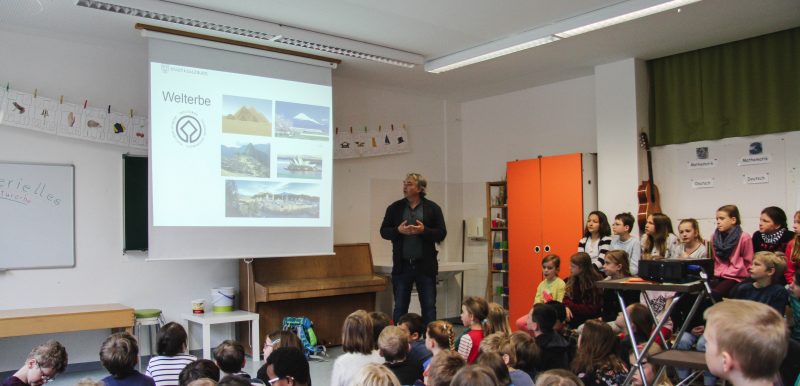
Salzburg school project on UNESCO World Heritage
Salzburg, Austria
Northwest Europe and North America
Contact
Mr. Bernhard Auinger
Mayor
Magistrat Salzburg
Mirabellplatz 4
Salzburg, Austria
5020
+43 (0) 662 8072 2100
[email protected]
Mr. Dr. techn. Dipl. Ing. Andreas Schmidbaur
Head of the Building Department
Magistrat Salzburg
Auerspergstraße 7
Salzburg, Austria
5020
+43/662/8072/3300
[email protected]
Find Us

Espace Quatre Cents
100, Quai Saint-André, Bureau 140
Québec (Québec) G1K 3Y2
Canada
+1 418 692-0000
Confidentiality Policy
Social Media Policy